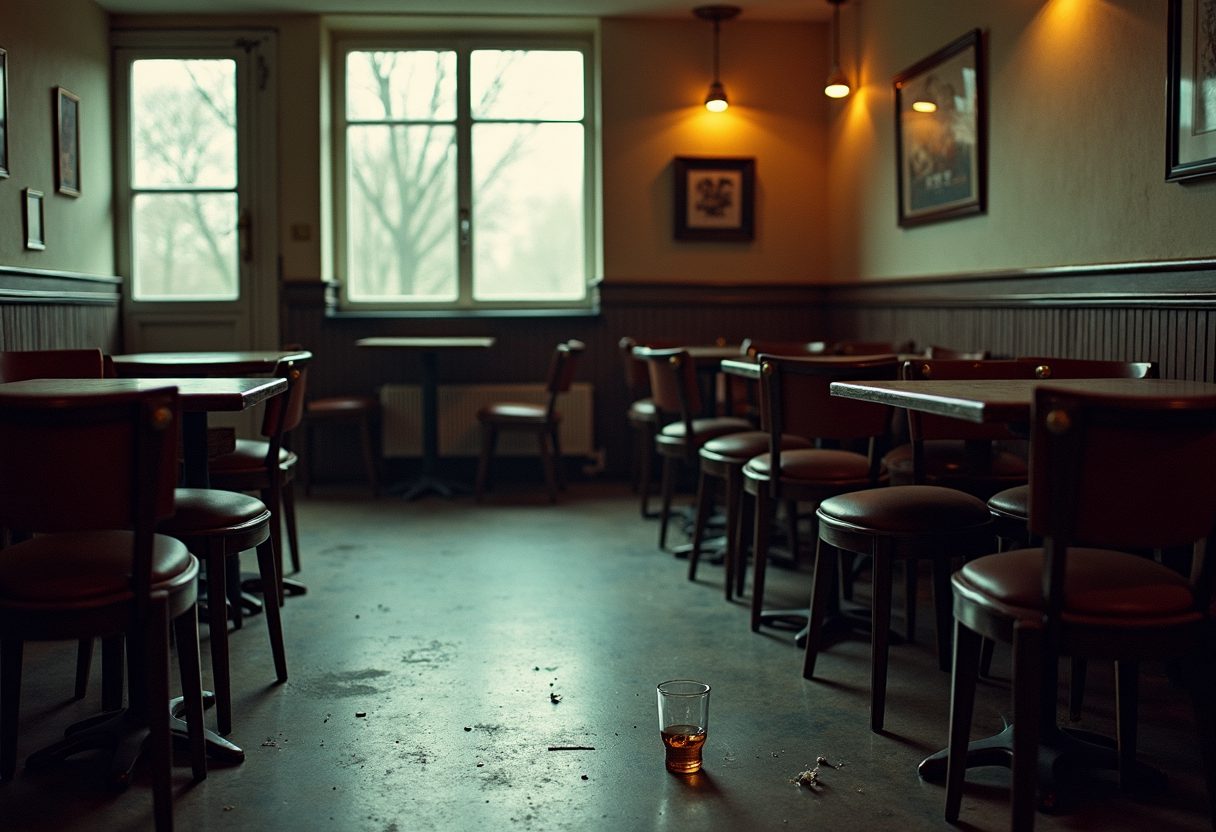
Disorderly conduct is one of the most common crimes committed by ordinary people. Usually alcohol, usually night-time, usually someone who "wasn't going to put up with it". In the morning comes the hangover and a few weeks later the summons. But the Criminal Code does not prosecute every argument; it prosecutes gross indecency or disorderly conduct in public, and both terms have limits.
What is and is not disorderly conduct
- In public or in a place accessible to the public. A pub, the street, a bus, a government office. You cannot commit disorderly conduct in your living room.
- Higher intensity. The Supreme Court is clear: an assault on another person is disorderly conduct only when it reaches a higher intensity and seriousness. A minor scuffle is a misdemeanour.
- Gross indecency is judged by what you actually did and where, not by what kind of person you are.
- Self-defence. Someone who repels an attack is not committing a crime. Who started it, however, is a question the courts have to resolve honestly, not skip over.
What you are facing
Up to two years in prison; in practice, for a first offence, a fine or a suspended sentence. If bodily harm is added, the offences run concurrently and the range goes up. On the other hand, for a lesser offence with no consequences there is a good chance of conditional discontinuation or settlement, provided you apologise and pay for what you broke.
What this rests on
No advice on this page is an opinion. Each one has a section of the law and a court decision behind it. Click through, the full text is on Europaius.
Statute
- § 358 tr. zákoníkudisorderly conduct: gross indecency or disorderly conduct in public or in a place accessible to the public, up to two years
- § 29 tr. zákoníkuself-defence: an otherwise criminal act by which someone repels an attack is not a criminal offence
- § 12 tr. zákoníkusubsidiarity of criminal repression: criminal liability only in cases that are harmful to society
Case law
- 4 Tdo 1128/2023 (Nejvyšší soud, 20. 2. 2024)an assault on another is disorderly conduct only at a higher intensity and seriousness comparable to the other elements of the offence
- 4 Tdo 177/2022 (Nejvyšší soud, 9. 6. 2022)gross indecency cannot be inferred from the offender's personality; the conduct itself and its setting are assessed, with regard to the subsidiarity of repression
- III. ÚS 3053/22 (Ústavní soud, 6. 12. 2022)the complainant argued self-defence and insufficient reasoning on the disorderly conduct; the Constitutional Court dismissed the complaint
Related cases
- „Pustili jsme se do sebe naráz.“ Výtržnictví, nebo nutná obrana? 2022 (in Czech)
A different situation?
- You or someone close to you has been detained
- Pre-trial detention is looming, or someone is already in it
- A police summons has arrived
- Criminal complaint: you want to file one, or one has been filed against you
- You have been charged with a criminal offence
- A penal order has arrived
- Alcohol or drugs behind the wheel, driving ban
- Plea agreement, conditional discontinuation
- House search
- You have become the victim of a crime
- European arrest warrant, extradition abroad
- Charged with embezzlement
- Dangerous threats and stalking
- You drove while banned from driving
- Charged with bodily harm
- Damage to property
- Violation of the inviolability of the home
- Defamation
- Conditional release from prison
- Negligent homicide: a fatal accident
- Credit fraud and subsidy fraud